

Paediatrics ENT Specialist Singapore

Paediatrics ENT Specialist Singapore

Dr Dennis Chua is a Visiting Consultant at KK Women’s and Children’s Hospital, where he cares for children with a wide range of ear, nose, and throat conditions. He commonly sees young patients with snoring and sleep-related breathing issues, airway problems, sinus conditions, allergies, hearing difficulties, and salivary gland disorders.


At his clinic, treatments are specially tailored to each child’s needs, with a strong focus on keeping little ones comfortable while ensuring care is safe and effective. Because children are more sensitive than adults, Dr Dennis takes the extra time to explain each step clearly and put both kids and parents at ease. Families can also feel reassured knowing they are seeing a trusted ENT specialist for children in Singapore, backed by years of expertise and a gentle, patient approach.

Dr. Chua in a suit examines a young patient set in a modern medical office with computers

Common Children’s ENT Conditions We Treat

Below are some of the most frequent ENT issues seen in children, and how specialist care helps:

Ear Problems & Hearing Issues

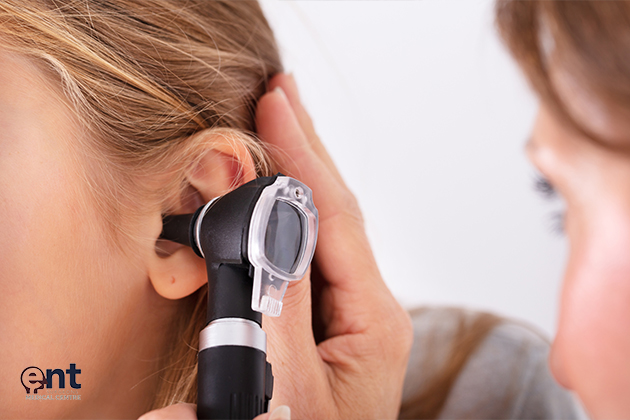
Ear infections and hearing issues are common in children and can affect speech, learning, and school performance. A paediatric ENT can check for frequent ear infections, fluid in the middle ear, or blocked ear canals, and provide the right treatment to protect your child’s hearing.

Sinus & Nasal Conditions

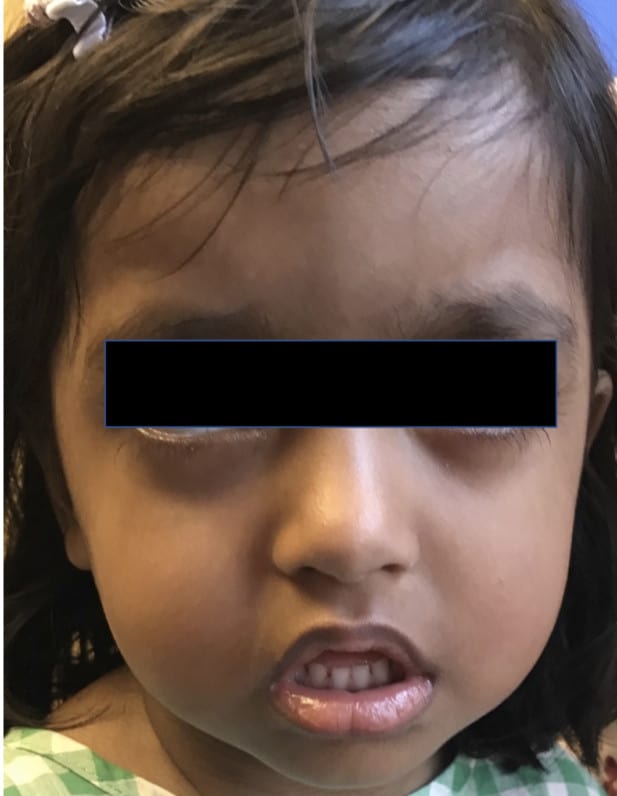
Blocked noses, allergies, and sinus infections can make children feel tired, congested, or unwell. If your child often has a runny or stuffy nose, mouth-breathes, or struggles with sinus problems, an ENT can help manage the cause and improve daily comfort.

Snoring, Sleep-Disordered Breathing & Airway Concerns

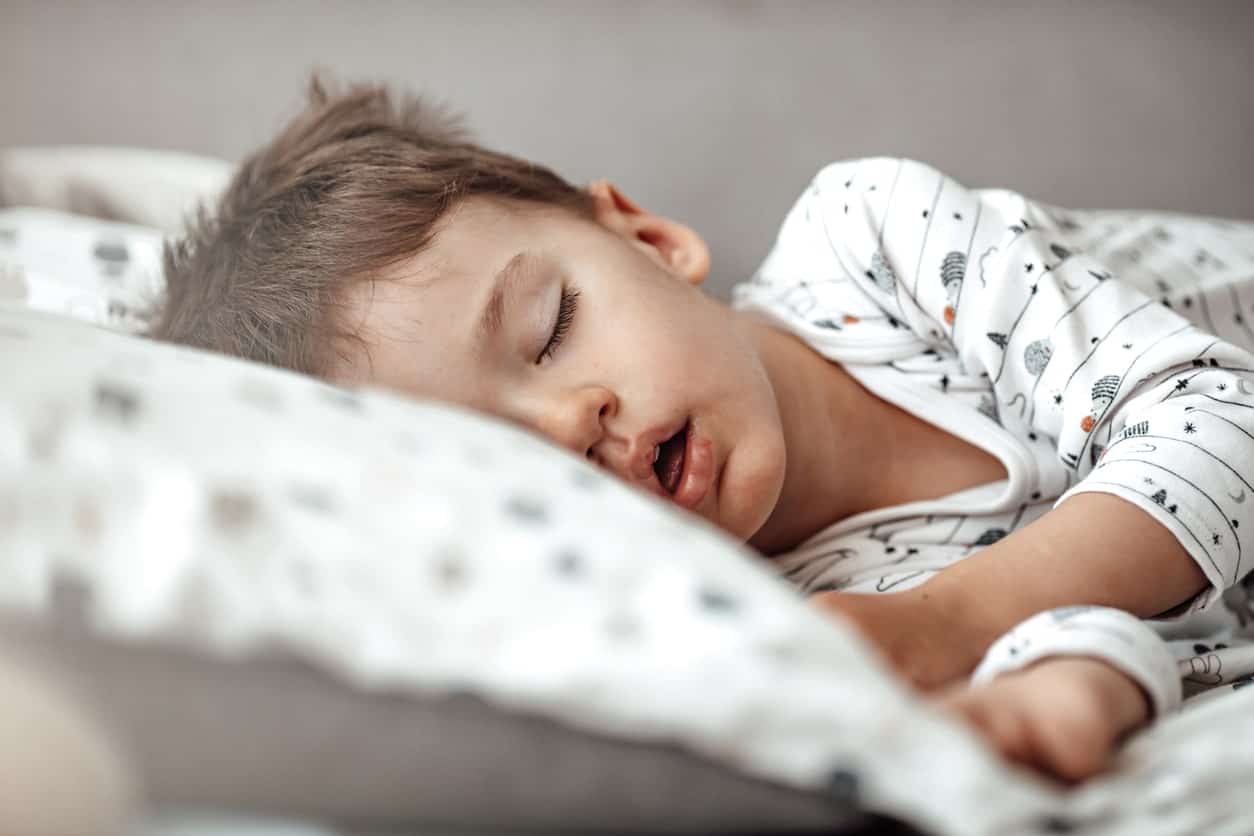
Snoring, noisy breathing, or sleep disturbances in kids may point to enlarged tonsils, adenoids, or other airway concerns. A paediatric ENT can assess the airway and recommend safe, effective treatments so your child can sleep and breathe better.

Throat, Tonsils & Swallowing Issues

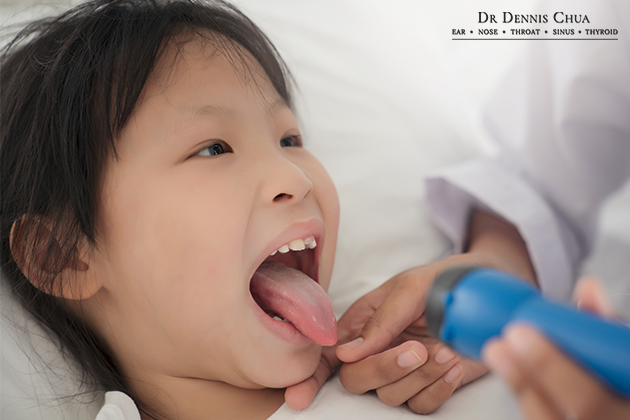
Throat infections, tonsillitis, or enlarged tonsils/adenoids can cause pain, swallowing difficulties, or disrupted sleep. While many cases can be managed without surgery, timely assessment helps ensure your child’s comfort and wellbeing.

Pediatric Allergies and Rhinitis

Dr Dennis Chua is a paediatric ENT Doctor who manages allergies in children, which affect many children in Singapore.

Nasal allergies and nasal obstruction are common in children. They present blocked noses, runny noses and can have disturbed sleep at night. A child may be rubbing their nose and eyes and have sustained bouts of sneezing, which can affect their performance at school and also reduce their quality of life. Allergic rhinitis in children can precipitate sleep apnoea which can have serious health consequences and must be consulted to a paediatric ENT clinic at once. (See Pediatric Sleep Apnoea link)

Prevention is often better than cure. Skin prick testing can be performed in suitable cases to look for possible allergens. This is a simple, painless test and the results will be ready within 30 minutes. Most patients who test positive on skin prick testing tend to be allergic to house dust mites. Being a very humid country, Singapore has a high prevalence of house dust mites, and measures to decrease the house dust mite load around the sleeping environment can help. This includes using dust mite-proof covers, washing bed sheets in hot water, and sunning them regularly. (Click here for allergen avoidance advice)

Sublingual immunotherapy (SLIT) is an effective treatment for allergies in selected patients and stops the ‘atopic march’ in which allergic rhinitis (nasal allergy) can lead to childhood asthma. This is a possible treatment in a select group of patients who are committed to receiving the treatment for many months. 

Dr. Chua in a suit examines a young patient set in a modern medical office with computers

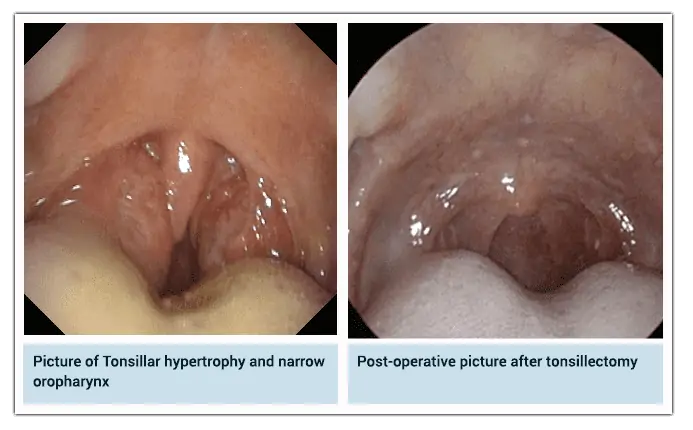
Dr Dennis Chua is an experienced paediatric ENT doctor in Singapore that manages little children with snoring issues. Tonsils and adenoids are part of the immune system and are considered the “gatekeepers” to the mouth and nose below the age of 2. However, after the age of 2, they serve little useful functions. When the tonsils and adenoids are enlarged, they can cause breathing obstruction. When severe, a child has snoring and sleep-disordered breathing from adenotonsillar hypertrophy, appearing to snore, choke or gasp when they sleep. This raises the possibility of Obstructive Sleep Apnoea (OSA) which can cause general health problems. OSA in children has been recognised since the 1970s, and since then the effects of paediatric OSA has been well-studied and eventually included in paediatric ENT. Consequences of untreated obstructive sleep apnoea include failure to thrive, enuresis (bed-wetting), attention-deficit disorder, behaviour problems, poor academic performance, and cardiopulmonary disease. Sleep apnoea in children can result in poorer memory and concentration. This can affect the learning ability significantly and can result in poorer academic grades in children. The most common aetiology of obstructive sleep apnoea in children is adenotonsillar hypertrophy. Clinical diagnosis of obstructive sleep apnoea in the clinic is reliable and may not warrant a sleep study if the cause of OSA is obviously from adenotonsillar hypertrophy. According to the American Academy of Otolaryngology 2011 Clinical Practice Guideline, a sleep study will be necessary for children who have comorbidities such as obesity, Down’s Syndrome, neuromuscular diseases, sickle cell disease, or mucopolysaccharidoses. Overall, less than 10 percent of children who suffer from OSA will need a sleep study before surgery. In these cases, adenoidectomy and tonsillectomy effectively cure OSA and restores the child’s breathing pattern. Visit our paediatric ENT clinic should your child experience such conditions.

Side-by-side images showing tonsillar hypertrophy and a narrow oropharynx compared to a post-tonsillectomy
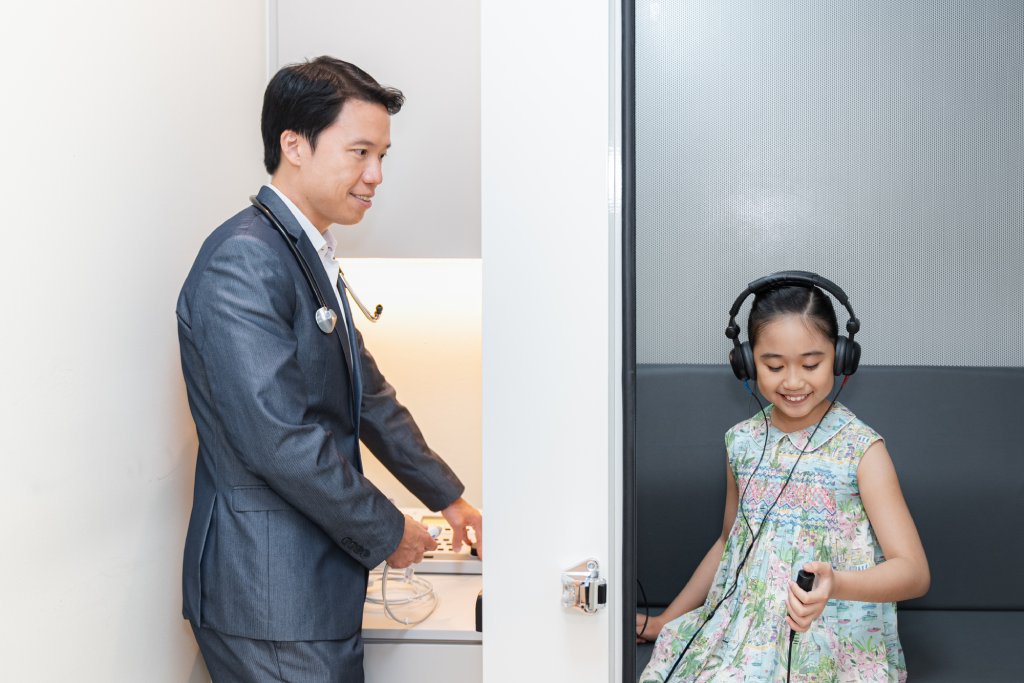
Dr. Chua in a suit adjusts equipment while a young girl in a dress wears headphones, sitting in a soundproof booth

As one of the best Kids’ ENT Doctor, Dr Dennis Chua manages patients with tonsilltis or tonsillar enlargement. Most of these patients do not require surgery and can be managed conservatively. Tonsillitis (infection of the tonsils) is a common infection during childhood. It can result in missed school and if it is recurrent, a significant decrease in the quality of life. A child with tonsillitis frequently presents with fever, sore throat and a loss of appetite. Sometimes there can be associated enlargement of the cervical lymph nodes where there can be tenderness of the neck.

Tonsillectomy (tonsil operation) can be considered when a patient has frequent attacks of tonsillitis resulting in missed school and affecting quality of life. Sometimes, the big tonsils can result in obstructive sleep apnoea and snoring and may need removal as well. Occasionally, asymmetrical tonsils where it is bigger on one side may need a biopsy to ascertain the diagnosis. Lymphoma can rarely present with an asymmetrical tonsil that is bigger on one side. Surgery can be performed safely in a day surgery setting with minimal pain.

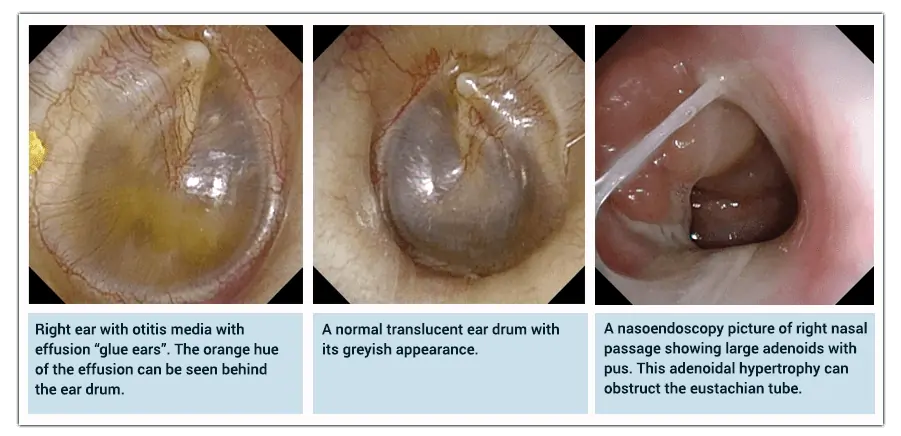
Dr Dennis Chua is an experienced Pediatric ENT specialist that sees many patients with fluid in the middle ear. Glue ears or Otitis media with effusion is a relatively common condition in the paediatric population. This is a condition associated with fluid collection in the middle ear. This is because their eustachian tube (connects the middle ear to the back of the nose) is still immature and is unable to drain out the fluid from the middle ear. Frequently they may have large adenoids that can obstruct the opening of the eustachian tube thereby worsening the problem. Otitis media with effusion can result in hearing loss which can affect speech and language development in a growing child. As this condition is relatively painless, it can often be missed. It is imperative to seek early treatment to avoid any developmental delay sequelae in children with hearing loss.

Three endoscopic images showing glue ears, normal eardrums, and nasal cavity with adenoids and pus
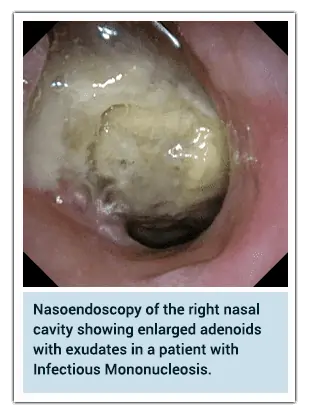
This is an infection caused by Epstein Barr Virus, occurring usually in teenagers. It is spread by saliva and therefore sometimes known as the “Kissing Disease”. Patients can present with sore throat, fever and fatigue. There are usually associated small neck lumps (lymph nodal enlargements) and the liver can have mild inflammation with raised liver enzymes. Physical examination will reveal white exudates on the tonsils and sometimes on the adenoids as well. Treatment is symptomatic and in severe infection affecting the appetite, the patient may need to be admitted to the hospital for an intravenous drip for rehydration and steroids. Antibiotics may be given as prophylaxis to prevent a bacterial infection. Even after recovery, patient may experience chronic fatigue for a few weeks after. It is important to ensure the liver inflammation subsides after the infection clears.
Nasoendoscopy image of the right nasal cavity revealing enlarged adenoids

Some conditions can be severe, especially if left untreated. In Singapore, a paediatric ENT specialist can help diagnose and manage issues like chronic ear infections or breathing difficulties early on.

To prepare your child for their first paediatric ENT visit in Singapore, explain the process in simple terms, reassure them, and bring along their favourite toy or comfort item to ease anxiety.

Factors like frequent colds, allergies, and exposure to second-hand smoke can increase the risk of paediatric ENT conditions in Singapore.

Dr Dennis Chua

Consultant ENT Specialist in Singapore

MRCS (Edinburgh), MMed (ENT), FAMS (ENT)

Dr Dennis Chua is a USA Fellowship-trained ENT specialist and Facial Plastic Surgeon with over 20 years of experience. He treats adults and children for a wide range of ENT conditions, including sinus and nasal disorders, allergies, snoring, ear infections, hearing loss, and thyroid or voice-related issues. A former Chief of Facial Plastic Surgery at Tan Tock Seng Hospital, Dr Dennis Chua is highly experienced in complex nose and sinus cases and serves as a Visiting Consultant at KK Women’s & Children’s Hospital.

Frequently Asked Questions

What does a paediatric ENT do?

A paediatric ENT (ear, nose, and throat) specialist diagnoses and treats ENT conditions in children, such as ear infections, snoring, tonsil and adenoid problems, sinus issues, allergies, and airway disorders.

To make the first appointment less stressful, explain the visit in simple, reassuring words so your child knows what to expect. Bringing along a favourite toy or comfort item can also help them feel more at ease. The clinic is experienced in working with children, so consultations are designed to keep young patients comfortable and supported.

Children require more specialised and gentle care. A paediatric ENT uses child-friendly techniques, explains procedures clearly, and tailors treatments to ensure young patients feel safe and comfortable.

Yes, when surgery is recommended, it is performed with strict safety standards in accredited hospitals. Most procedures for children, such as tonsillectomy, adenoidectomy, or grommet insertion, are safe and effective, with recovery guided closely by the specialist.

Other Related Articles

Contact Form

Feel free to contact, We are more than happy to assist you! We will get back to you as soon as possible.